







Settlement Overview
Sitzer-Burnett was a class-action lawsuit that was filed in Missouri federal court by a group of home sellers in the state against the National Association of REALTORS® (NAR) and other defendants, including Anywhere, Berkshire Hathaway HomeServices, Keller Williams and RE/MAX. The plaintiffs claimed that real estate commission rates were too high, buyers’ representatives were paid too much and NAR’s Code of Ethics and MLS Handbook, along with the corporate defendants’ practices, led to inflated commission rates.
The NAR Settlement ended litigation of claims brought on behalf of the plaintiffs, secured a release of liability for over one million NAR members and preserved the choices consumers have regarding real estate services and compensation.
The terms of the settlement required a number of practice changes for members that work with residential home buyers and home sellers, including but not limited to the following:
- Offers of cooperating compensation between brokerages are prohibited on the MLS. The settlement preserves the right for offers of compensation to be made off the MLS.
- Written brokerage agreements are required to be signed with buyers prior to touring a home.
- Compensation must be fully disclosed and objectively ascertainable in written buyer agreements. When representing sellers, a written disclosure and approval from the seller for any payment or offer of payment being made to a cooperating brokerage is required. Such disclosure and approval must also specify the exact amount or rate of the offer/payment.
- A REALTOR® cannot accept more compensation than what is in their written buyer agreement, regardless of the source of payment.
For a complete overview of Sitzer-Burnett and the NAR settlement, visit facts.realtor.
Settlement Timeline
March 15, 2024
NAR Settlement Agreement is signed. The terms of the settlement, among other things, preserves cooperation off the MLS and establishes the practice of written buyer agreements that clearly outline the services buyers will receive and how much those services will cost. The NAR Settlement and its practice changes are specific to residential home buyers and home sellers.
April 23, 2024
Court grants preliminary approval of the Settlement. This set in motion an opt-in period for non-REALTOR® -owned MLSs to decide whether to opt into the terms of the NAR Settlement. August 17, 2024, is established as the date to comply with the new practice changes under the NAR Settlement.
June 18, 2024
Midwest Real Estate Data (MRED), the MLS vendor for our assocation, announces they have opted into the NAR Settlement and agree to adopt the required practice changes. Under the terms of the Settlement, the MLS is responsible for enforcing the written buyer agreement requirement.
July 17, 2024
Knowing that MRED had opted into the NAR Settlement, we released a series of training tools, resources and forms for members to prepare for the August 17th deadline to implement new practice changes. A special Managing Broker Meeting was held to train Managing Brokers. We unveiled a dedicated Settlement Resource webpage and Settlement Resource Guide for guidance and training. We also reviewed new forms and released a schedule for weekly All-Member Training webinars to discuss compliance with the terms of the NAR settlement and its practice changes.
July-August, 2024
We hosted weekly all-member webinars and trainings, met with offices for custom training and spoke at industry events to discuss the NAR practice changes, forms and resources.
August 17, 2024
New practice changes went into effect, including MRED system changes removing all offers of compensation fields in its system.
November 26, 2024
The court granted final approval of NAR’s settlement agreement to resolve class action claims related to broker commissions.
January 1, 2025
The Illinois Real Estate License Act was amended, which brought several practice changes from the settlement into Illinois Law. All licensees in the State of Illinois must now have a written brokerage agreement for all clients and all transaction types. This includes when working with a seller, buyer, landlord, tenant or investor and includes residential, leasing, commercial, and property management transaction types. The amended license act also requires that brokerages disclose in their written agreements, whether on the seller/landlord side or buyer/tenant side, all amounts of compensation they will charge their own clients and any amounts they might pay to other cooperating brokers in transactions.
Resources & Training
NAR Resources
NAR Consumer Guides
Help your consumers understand what these changes mean for them.
- Seller Concessions
- Consumer Guide to Written Buyer Agreements
- Consumer Guide to Negotiating Written Buyer Agreements
- Open Houses and Written Agreements
- REALTORS® Duty to Put Client Interests Above Their Own
- What Veterans Need to Know About Buying A Home
- Offers of Compensation
- Negotiating Written Buyer Agreements
- Seller Concessions
- Multiple Listing Services (MLSs)
- Fair Housing
- Listing Agreements
- 10 Questions to Ask a Buyer’s Agent
- 10 Questions to Ask a Seller’s Agent
- Buying Your First Home
- Mortgages and Financing
- Steps Between Signing and Closing
Dos & Don’ts
Guidance on implementing new business practice changes in your transactions with homebuyers and sellers.
MRED Resources
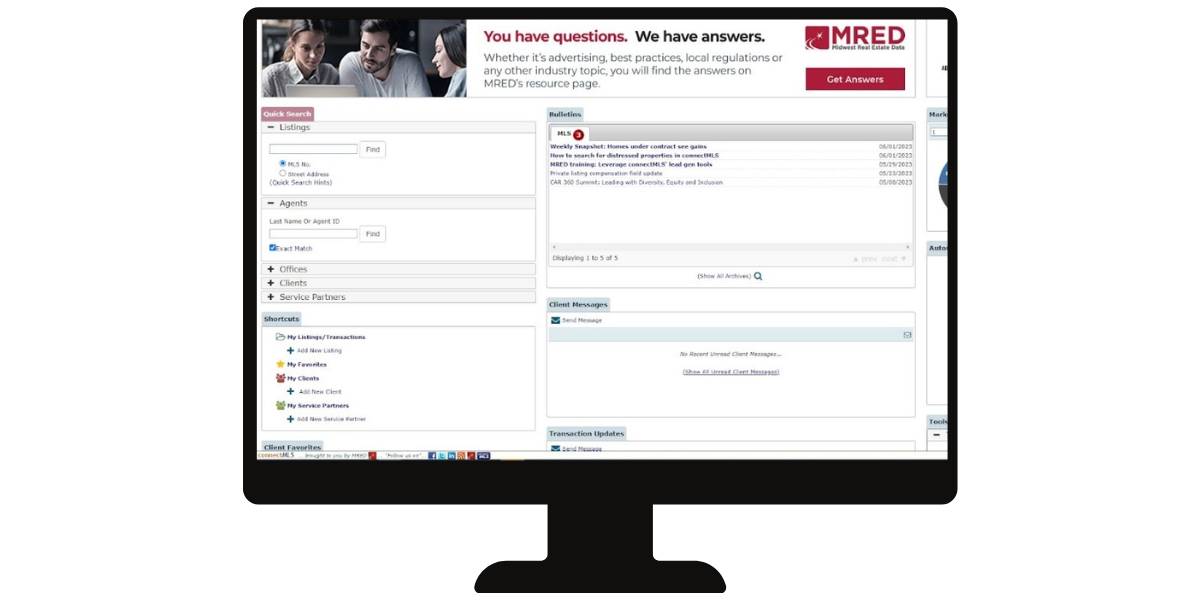
MRED’s policy changes related to the NAR settlement went into effect on August 17, 2024. Click the MRED Resource page below for more information, including the latest rules & regulations and system changes within the MLS.
TRAINING & COURSES
- The Accredited Buyers Representative (ABR) Designation
- The Seller Representative Specialist (SRS) Designation
- Browse MRED training and classes.
- Special Member Benefit: Access a library of complimentary skill-building courses with practical training in buyer representation, lead generation and so much more.
Forms & Contracts
Members may choose to utilize the following form templates which are available on this website as a member benefit:
- Exclusive Right to Sell Listing Agreement (For Sale Listing Agreement)
- Exclusive Right to Lease Listing Agreement (Rental Listing Agreement)
- Exclusive or Non-Exclusive Buyer-Broker Representation Agreements
- Updated and Revised Purchase and Sale Contracts
- Brokerage to Brokerage Cooperating Compensation Agreement
- Commission Statement
- Notice of No Agency
Legal Hotline
As an Illinois REALTORS® member, the Illinois REALTORS®’ Legal Hotline is a valuable resource to members whose questions or issues are related to licensing, agency, brokerage agreements or the NAR Code of Ethics.
Resources To Help You Talk with Your Clients
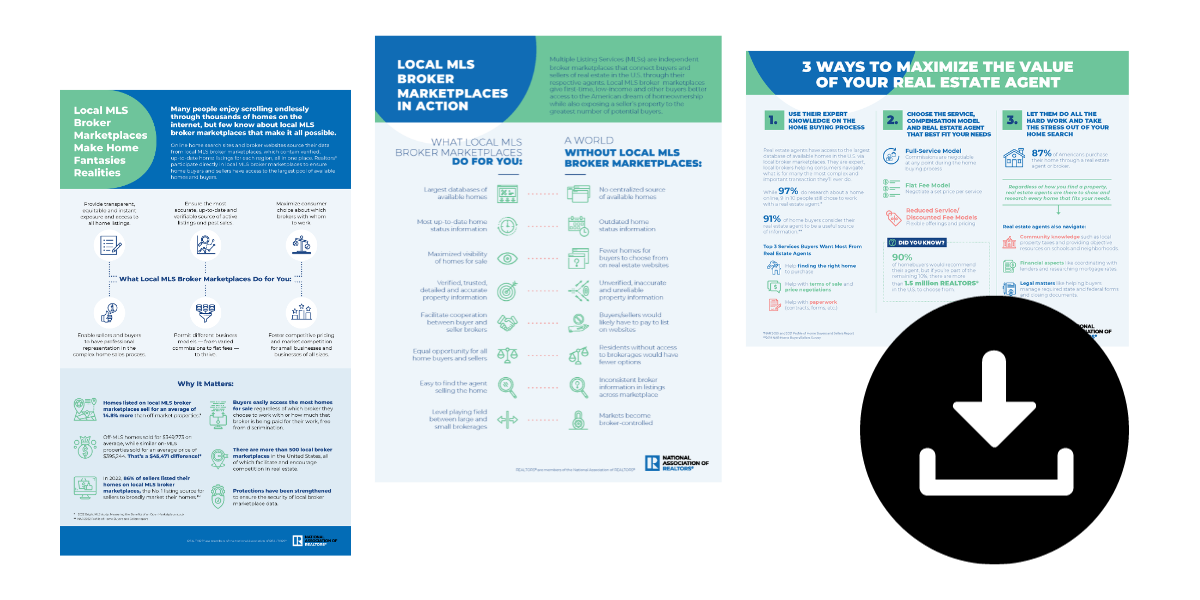
These resources from facts.realtor includes answers to FAQs and shareable videos, articles and infographics.
- 179 Ways Agents Who Are REALTORS® Are Worth Every Penny of Their Compensation
- Local Broker Marketplaces Make Home Fantasies Realities
- Local Broker Marketplaces in Action
- Economics of Buying a Home
- How Real Estate Compensation Works
- Homebuying Process Primer
- Why Hire a REALTOR®
- Buying a Home with A REALTOR®
- Selling a Home with A REALTOR®
- 3 Ways to Maximize the Value of your Real Estate Agent
Schedule a Private Training in Your Office
Stay up-to-date on industry trends by inviting association staff to present on new rules, laws, forms and other resources relevant to your business.