

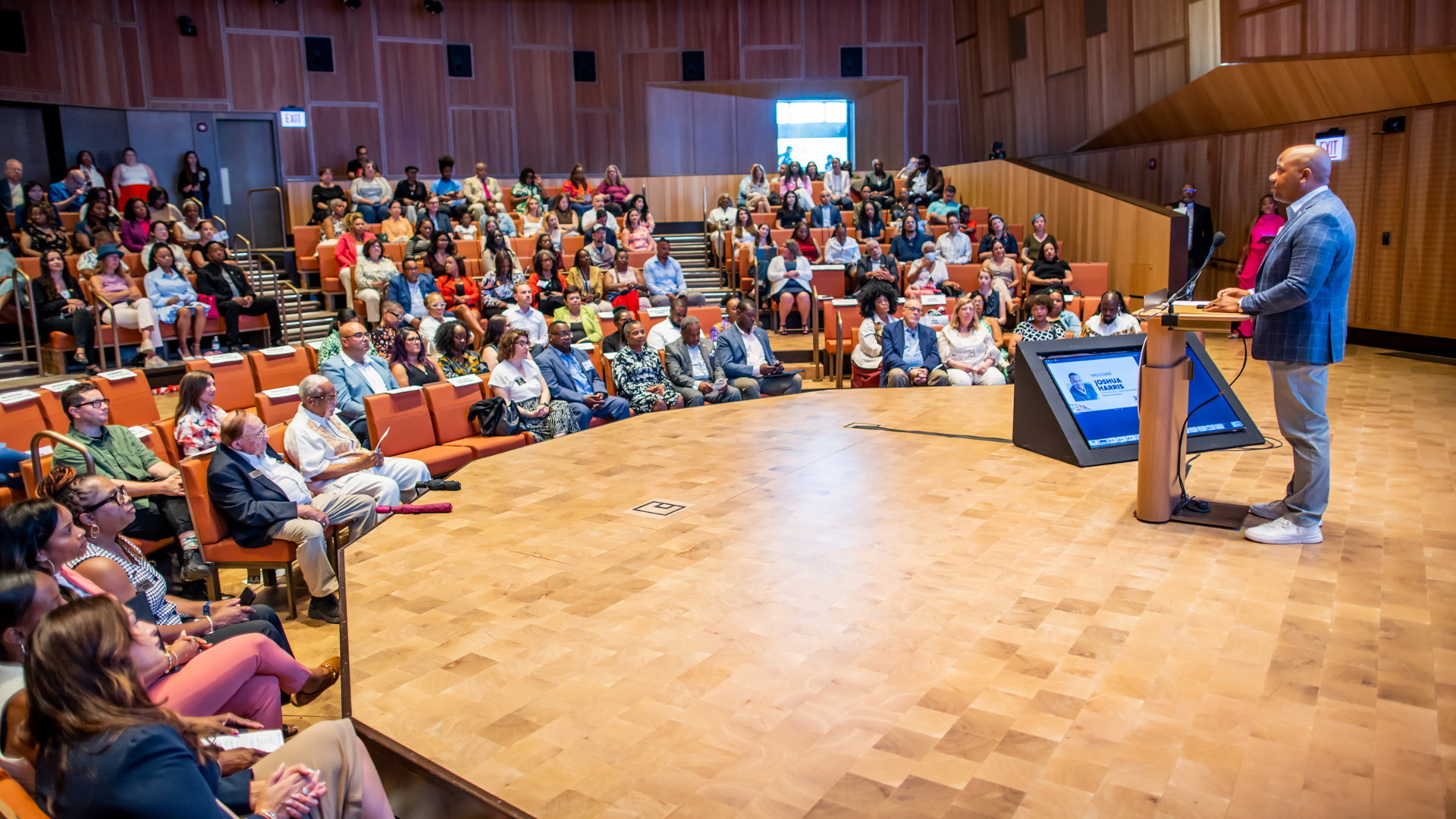


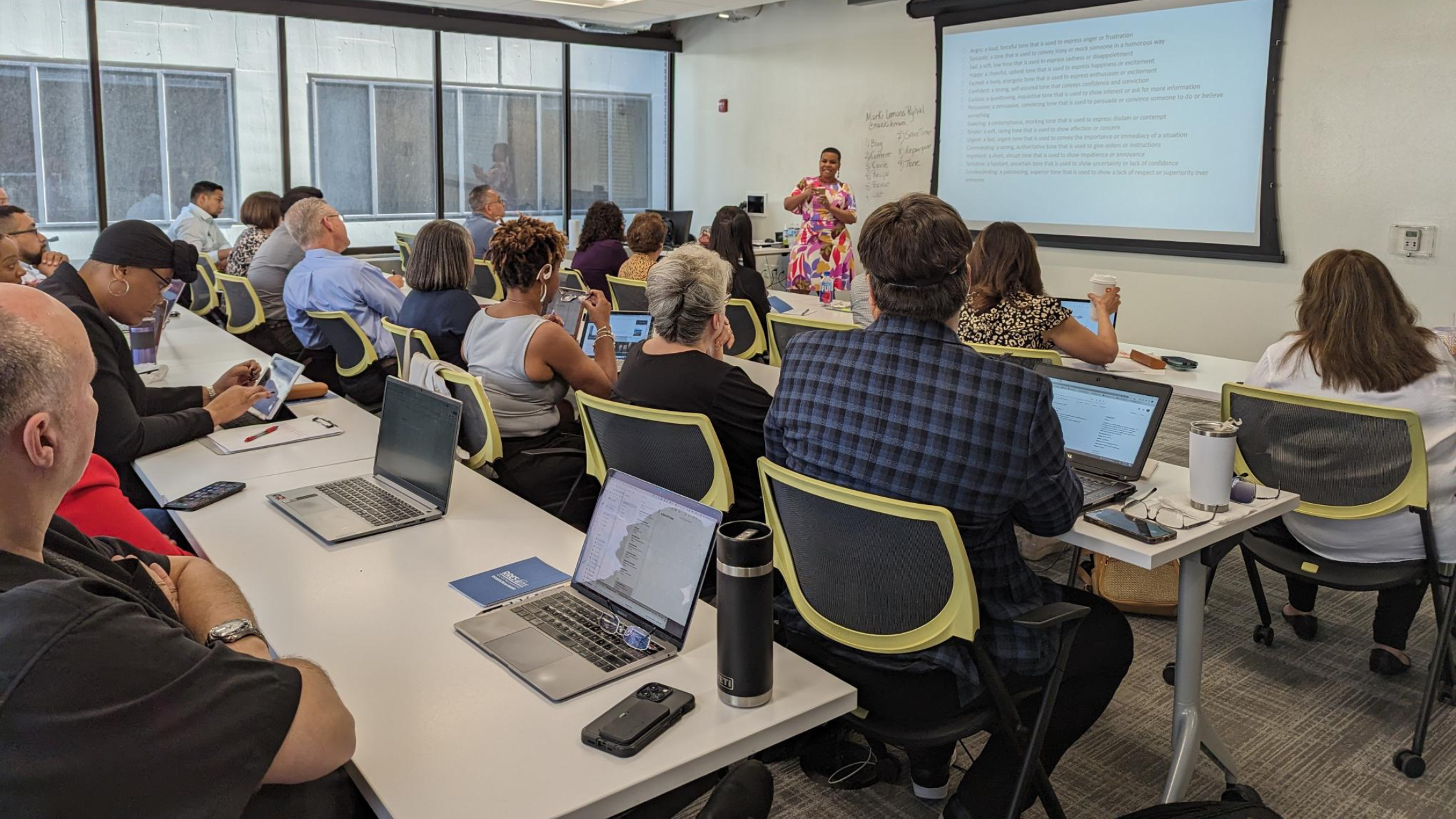



No two days in real estate look the same — but the most successful agents find a way to bring structure to the chaos. At our latest YPN Breakfast, moderator Brandon Banks of Coldwell Banker Realty sat down with three agents who have figured out how to stop putting out fires every week and start building businesses that actually grow. Here’s what they shared.
Meet the Speakers

Brandon Banks
REALTOR® | Coldwell Banker Realty
Moderator & YPN Advisory Board Member

David Dominguez
Founding Partner | Realty of America
Panelist

Danielle Dowell
Founder | The DoWell Group | Berkshire Hathaway HomeServices Chicago
Panelist

Zach Koran
Broker | Baird & Warner
Panelist
Win the Morning, Win the Day
All three panelists are early risers, and that’s not a coincidence. The morning hours are the only part of the day that belong entirely to you, before clients, contracts and inbound fires have a chance to take over.
David Dominguez, Realty of America, is up at 6:00 AM, makes breakfast for his kids, drops them at school and is at his desk by 9:00 AM. His philosophy: protect your mornings for prospecting and lead generation, then open the afternoon for showings, listing appointments and meetings. “If you win the morning, you’ve focused on your business — your to-do list, your prospecting, your lead generation,” he said. “Set all your appointments after 1:00 PM.”
Zach Koran, Baird & Warner, starts even earlier. His 5:30–8:00 AM block is non-negotiable — prayer, meditation, a gratitude list and a workout. “I can truly feel when I don’t do that,” he said. He follows it immediately with a time-blocked prospecting window from 8:30–11:00 AM. Danielle Dowell, Berkshire Hathaway HomeServices Chicago, uses her early mornings to read the Wall Street Journal, industry news or anything that keeps her conversant across the topics her clients care about. “That’s my time,” she said. “There’s nothing going on in my day yet.”
Quick Tip: You don’t have to be a 5:00 AM person. The real principle here is identifying the part of your day that belongs to you before the world gets loud — and protecting it.
Time Blocking Isn’t Rigid, But It Has to Be Real
Koran structures his prospecting week using a system he learned through coaching — a framework that assigns a different focus to each day. Mondays are for VIPs. Tuesday is follow-up. Wednesday goes to hot leads. Thursday is sphere outreach, when he picks a letter of the alphabet and works through his top 200. Friday is for strategic partners.
He targets 8 to 10 touches per day. “It might not sound like a lot, but I try to be consistent with that,” he said. To protect those blocks, he puts his phone on airplane mode. “When I do that… you’d be surprised what you can get done.”
Dominguez takes a similar approach, framing it around two simple categories: money-making activities in the morning, appointments and meetings in the afternoon. When a client asks to see a house at 10:00 AM on a Tuesday, his answer is straightforward: I’m not available at 10:00 AM, but I’m available at 12:00, 1:00 or 2:00 — which works for you? “You don’t have to tell your client you have something else going on,” he said. “Just give them two options every time, and you’re controlling the appointment.”
Action Step: Pick one day this week and block 8:30–11:00 AM for prospecting only. Put it on your calendar like a client meeting. If it gets interrupted, make note of what pulled you away — that’s your first data point.
Prospecting Is the Engine. Everything Else Follows
Prospecting is the activity most agents deprioritize when they get busy, but it’s also the activity they regret skipping when the pipeline runs dry.
Dominguez tracks leads and contracts, not closings. “The more leads you get, the more clients you get. The more clients you get, the more contracts you get. The more contracts you get, the more closings you get.” For him, a successful week is one in which his team hits their lead-generation numbers. Closings are the downstream result.
Dowell’s approach is less structured but equally consistent. She works through her database of roughly 6,000 contacts — scrolling, calling, updating records, checking social connections — and it takes her six to seven months to get through the full list before she starts over. “When I’m going through the database, I’m making sure everything’s up to date,” she said. “The more people see you, the more they remember you.” She shared one story that stuck with the room: a longtime residential client turned out to own significant multifamily real estate, something Dowell only discovered by picking up the phone. “Had I not called them, that wouldn’t have happened.”
Koran echoes the same principle: “Hot email follow-up and hot leads — that’s probably my number one money-making activity.”
Action Step: Identify your database tool — whether that’s a CRM, Outlook or your phone contacts — and block one hour this week to clean and update records. Outdated contacts are dead leads.
Delegate Before You Burn Out — Not After
Each panelist described a version of the same story: a period of unsustainable grind, followed by a decision to build systems and bring in help. Dowell called hers the “blackout years.” Dominguez had one too — he forgot his mom’s birthday, Mother’s Day, his wife’s birthday and his own. Koran tried to build a team too early, before his own business was solid enough to support it, and had to pull back before rebuilding.
The throughline: delegation is not a reward for success. It’s what makes sustained success possible.
Dominguez hired his first assistant in his fourth month in real estate, before he could comfortably afford to, because he already had eight deals under contract and needed someone handling follow-up and communication. “Ever since I hired that person, I’ve never looked back,” he said. His advice to agents who hesitate: “Don’t go buy flashy stuff. Put your money into your business.”
Koran’s turning point came when a mentor asked him why he was doing repeatable, low-value tasks himself. That reframe pushed him to build a lean team — a virtual assistant, a small marketing team and two showing agents — so he could stay focused on relationships and prospecting.
Quick Tip: Write down everything you did last week. Circle the tasks only you can do. Everything else is a candidate for delegation.
There’s No Such Thing as a Real Estate Emergency
When the audience asked how to decide which client messages deserve an immediate response during a time block, all three panelists said roughly the same thing: almost nothing is actually an emergency.
“I’m not a firefighter,” Dowell said. Dominguez echoed it: “Call the attorney. Call the police. Call the fireman. That’s what you have them for.” Koran added that the answer depends on the client’s personality — some people signal urgency that isn’t real, and learning to read that comes with experience.
The practical solution: build a system so clients aren’t emailing into a void. Dowell’s team uses templated touchpoints throughout each transaction — what to expect at contract, through attorney review, at closing — so clients have context without needing to call. “You can’t tell them to read something,” she said, “but you can refer them back to what you sent.”
Action Step: If you don’t have a client communication template for your transaction process, start with one stage — under contract through attorney review — and write out what your client should know and when. That single document will cut your inbound noise significantly.
Consistency Beats Motivation Every Time
One of the most useful exchanges of the morning came when Banks asked how panelists pick themselves back up after a slow week.
Dowell reframed the question: “I don’t really get too stressed about stuff. I think it’s okay to have down weeks.” She treats real estate as a lifestyle, not a job — and says that mental shift is what creates longevity. “Once you get to the point where it’s just part of who you are, it’s kind of robotic.”
Koran made a useful distinction: “There’s a big difference between being busy and being productive.” He’s learned to recognize the days where he ran hard but didn’t actually move anything forward, and he doesn’t beat himself up. He just gets back on track.
Dominguez’s answer was structural. Everything from field trips, date nights, family parties and school pickups goes on the Google Calendar. “I have my staff print out my calendar every single day and set it on my desk when I walk in,” he said. “I already know what I have to do and who I have to talk to before I sit down.”
Action Step: At the end of this week, do a five-minute review. Were you busy, or were you productive? Name one activity that actually moved a deal or relationship forward. Build from there.
Advice for New Agents: Start Wide, Then Narrow
For agents early in their careers, the panel was clear: open houses, database outreach and social media are still the foundation, but you have to do them consistently before results show up.
Dowell started by hosting two open houses every Saturday and two every Sunday. She took every rental nobody else wanted. She cold called expireds. “Sometimes you’re not going to get paid,” she said. “But this is a marathon, not a sprint. When the faucet turns on, it turns on because you’ve been consistent from the beginning.”
Koran’s early move was a copy-paste outreach message sent to 25 to 30 Facebook connections a day. Not sophisticated, but it worked. “Start wide with four or five things that get you uncomfortable,” he said, “then narrow as you go. The business will come if you’re hitting pavement.”
Dominguez’s framework for new agents is simple: lead generation and prospecting every morning, appointments every afternoon. “Protect your mornings. That’s non-negotiable.”
Quick Tip: If you’re newer and don’t have a team to work under, open houses and direct outreach are still the most direct paths to early transactions. Pick one and do it every single week.
Apps & Tools Mentioned
- Google Calendar: Dominguez’s go-to organizational tool. He has his calendar printed and placed on his desk every morning.
- Follow Up Boss: Dominguez’s CRM for lead and client management.
- Claude: Koran connects Claude Cowork to his Gmail and Google Calendar to generate a daily overview of priorities, appointments and prospecting tasks each morning.
- Microsoft Outlook: Dowell’s database and calendar tool. She manually scrolls through roughly 6,000 contacts on a rolling, six-to-seven-month cycle.
- WhatsApp: Dominguez uses it for team communication.
- Urbanize Chicago, Inman, Crain’s Chicago Business, Wall Street Journal, Forbes: Danielle’s reading list for staying current on development, market activity and broader business news.